
No products in the cart.
Can You Beat the CDC’s Fatigue Stats?

Research-Backed Insights | Updated September 2026
The Calm Collective Blog is a curated educational resource by calmlyooted.com. We explore plant-based, restorative strategies designed to help you navigate systemic wellness with clarity and intention.
You reach for a second coffee before the day has properly started, then wonder why your energy still feels thin by lunch. The latest CDC’s Fatigue Stats show that this feeling is common, but common does not mean you have to accept it as your normal.
The CDC Report offers a useful starting point, not a personal verdict. We favor realistic cue shifts and careful observation over a magic pill.
Need to Know: In 2024, 71.5% of U.S. adults said they felt very tired or exhausted on at least some days during the prior three months. Frequent fatigue affected 16.6%. These figures describe self-reported tiredness, not a medical diagnosis.
Key Takeaways
- A national fatigue statistic cannot explain why you feel tired.
- Small, repeatable changes to sleep timing, light, movement, and caffeine can reveal useful patterns.
- Persistent fatigue or unsafe sleepiness deserves qualified professional guidance.
What the CDC Report Reveals About Everyday Fatigue
The 2024 National Health Interview Survey asked adults how often they felt very tired or exhausted during the prior three months. According to the CDC/NCHS fatigue report, 71.5% reported feeling that way at least some days.
The breakdown adds context. While 28.5% said they never felt very tired or exhausted, 54.9% felt it on some days. Another 10.7% felt it most days, and 5.9% felt it every day.
The report defines frequent fatigue as feeling very tired or exhausted most days or every day. That totaled 16.6% of adults. Frequent fatigue was more common among adults ages 18 to 34, at 19.5%, than among adults age 65 and older, at 12.9%.
Featured Snippet: The 2024 CDC/NCHS report drew on the National Health Interview Survey, an ongoing household survey of U.S. health experiences. It records self-reported patterns, not diagnoses or causes.
Why a Big Fatigue Number Does Not Tell Your Whole Story
A broad survey question can’t capture your sleep timing, stress load, medication changes, work schedule, alcohol use, or what happens after you turn out the lights. Still, it gives language to an experience many people recognize.
Pay attention when tiredness becomes persistent or disrupts daily life. Notice patterns around caffeine, nasal congestion, repeated waking, activity, stress, and whether you wake feeling restored after enough time in bed.
Snoring, gasping, witnessed breathing pauses, chest pain, severe shortness of breath, or daytime sleepiness that makes driving unsafe need prompt professional attention. Don’t use alcohol, over-the-counter sleep aids, or plant-based products to cover up repeated breathing concerns.
The Overlooked Link Between Broken Sleep and Harder Days
A rough night can make morning light, balanced meals, movement, patience, and focused work feel harder than they should. Then the low-energy day can lead to late caffeine, less activity, more stimulation, and another unsettled night.
We see fatigue as a systems issue. Sleep timing, light exposure, food timing, stress, movement, and work demands interact. That perspective doesn’t prove any one factor caused your fatigue, but it can help you spot which signals deserve attention.
When Work Hours Change the Plan
Shift work asks for adaptation, not perfection. If your schedule changes often, protect one anchor sleep block that remains realistic on workdays and days off. A dark, cool, quiet room, planned short naps, and earlier caffeine can make daytime rest more workable.
Light matters, too. Some people benefit from managing bright light around the commute while keeping driving safety first. A chronotype-based sleep routine can help you consider whether your wake time and wind-down cues fit your natural timing better than a rigid “normal” schedule.
The goal is not to force your body into someone else’s routine. It is to give your week a few reliable recovery cues.
Can You Beat the CDC’s Fatigue Stats? Start With the Daily Signals That Shape Energy
We can’t change a national number overnight. However, you can run a practical experiment that may make a Tuesday afternoon feel clearer and less dependent on another coffee.
Regular activity, steadier sleep timing, morning light, and lower evening stimulation are sensible lifestyle foundations. The CDC physical activity guidance recommends adults get 150 minutes of moderate activity each week, plus muscle-strengthening work on two or more days.
Featured Snippet: The NCCIH sleep and complementary health guidance notes that chronic insomnia has evidence-based treatment options, including multicomponent CBT-I. Calming routines can be helpful, but they do not replace qualified care when sleep concerns persist.
Protect a Steady Sleep Window Before Chasing Products
Choose a wake time that fits your life most days. Get outdoor light soon after waking when practical, then dim household lights as the evening winds down. Keep the bedroom cool, dark, and quiet, and move screens away for the final 30 to 60 minutes before bed.
Shift workers may need a different approach. An anchor sleep block, a short planned nap, and earlier caffeine often fit better than copying a daytime schedule. We recommend aiming for repeatable, not flawless.

Repeatable light, room, and timing cues can help your body recognize when to wake and when to wind down.
Use Movement and Caffeine Timing to Clear the Morning Fog
Movement does not need to become a heroic workout. A morning walk, yard work, easy mobility session, or strength training earlier in the day can support steadier focus and less afternoon dragging.
Consistency matters more than intensity. Intense late-night exercise works for some people, yet it can leave others feeling too activated for bed. Test what fits your own response.
Also test an earlier caffeine cutoff when nighttime rest feels light or broken. The afternoon coffee that saves a meeting can sometimes follow you into the night. A modest timing change may help you feel more patient and less wired the next day.
Keep Plant-Based Wellness in Its Proper Place
Clean-label teas, magnesium-rich foods, CBD, and functional mushrooms can make a calming ritual feel more intentional. Still, evidence varies by ingredient and product. None of them replaces sound sleep habits or professional guidance.
Start with one change at a time. Read labels, look for third-party testing, and ask a clinician or pharmacist about potential concerns if you take prescriptions, are pregnant, have chronic conditions, or have breathing issues at night.
CalmlyRooted bundle options can be an optional way to simplify a ritual instead of crowding your nightstand. Keep product support secondary to the daily cues that shape recovery.
🛒 Shop Premium Sleep & Energy Support Here 🛒
A Seven-Day Energy Reset That Turns Advice Into Evidence
A one-week log can turn vague frustration into useful observations. Keep it simple enough to complete on a busy evening, and judge progress by daytime function rather than a perfect sleep score.
Educational Insights, not a diagnosis
- [ ] Your wake time changes by more than one hour.
- [ ] Caffeine reaches the afternoon.
- [ ] Screens stay in bed.
- [ ] Movement is rare.
- [ ] Mornings feel foggy despite enough time in bed.
Zero or one check suggests a fairly steady foundation. Two or three checks suggest a rhythm that may need support. Four or five checks suggest timing, stimulation, or recovery habits deserve closer attention. These observations do not identify a medical condition.
How to Run the Seven-Day Check Without Overcomplicating It
- Choose one wake-time anchor that is realistic for the next seven days.
- Record bedtime, wake time, caffeine, movement, and morning energy each day.
- Add outdoor morning light and a short walk when practical.
- Move caffeine earlier if it reaches the afternoon.
- Reduce late stimulation by keeping screens out of bed.
- Review sleep latency, nighttime wake-ups, total sleep time, grogginess, and next-day focus.
- Adjust one variable at a time after the week ends.
The log is not a diagnosis. It is a way to notice whether a 2 p.m. slump follows late scrolling, irregular wake times, alcohol, or a restless night.
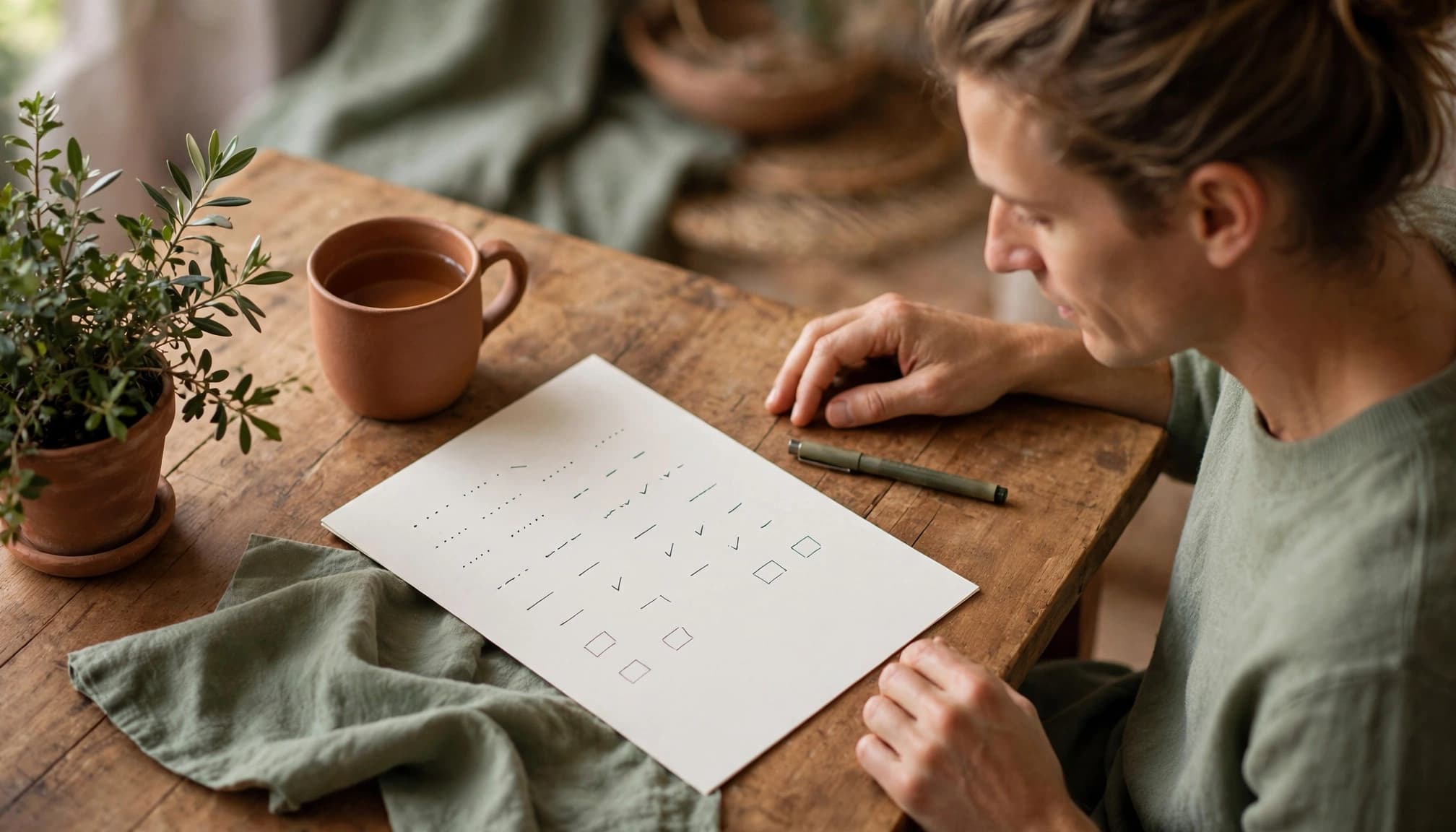
The goal of a simple sleep log is to notice patterns, not chase perfection.
Know When Self-Help Has Reached Its Limit
Talk with a qualified clinician if fatigue persists, affects work or daily responsibilities, or makes driving unsafe. Bring your one-week log and ask whether a home sleep test or an in-lab study may fit your situation.
Repeated gasping, witnessed breathing pauses, chest pain, severe shortness of breath, or recurring nighttime heart pounding deserve discussion rather than guesswork. Anxiety and sleep disruption can overlap, so a clear history can help guide the next step.
What Beating the Stats Really Looks Like in Real Life
Success does not mean permanently eliminating tiredness. It looks like clearer mornings, steadier focus, safer energy, more patience, and fewer evenings spent fighting bedtime.
The most useful change may be protecting the first hour of the day and the last hour of the night, rather than buying a stronger product. Morning light, a short walk, a consistent wake cue, dimmer evenings, and a phone outside the bedroom can carry more weight than an elaborate routine.

Better sleep support shows up in ordinary afternoon function, not a perfect wellness routine.
For more practical context, explore our sleep and stress approach. Habits remain the foundation, while products belong in a supporting role.
Want more insights like this? 👉 Join the Calm Collective for our latest reviews, guides, how-to articles and more.
A More Grounded Way to Read the Numbers
The CDC Report found that 71.5% of adults experienced tiredness or exhaustion on at least some days, while 16.6% reported it most days or every day. Those numbers describe a widespread experience, but they cannot tell your individual story.
Use the statistic as a starting point for one small seven-day experiment. We favor clear labels, realistic routines, transparent sourcing, third-party testing, and professional support when issues persist.
Better energy often starts with fewer competing signals, not more pressure to perform.
Ready to Find Your Best Sleep? Experience the calmlyrooted.com difference and get an exclusive discount on your first order. Use WELLNESS27 at checkout to instantly save 27% OFF your entire purchase. Plus – unlock FREE Shipping on any order over $49.95!
Published By: