
No products in the cart.
Better Tips for Deep Sleep Without Melatonin

Research-Backed Insights | Updated May 2026
The Calm Collective Blog is a curated educational resource by CalmlyRooted.com. We explore plant-based, restorative strategies designed to help you navigate systemic wellness with clarity and intention.
On any given night, the house can go quiet while the mind keeps stomping around in work boots. You feel tired, but your brain acts like the county fair is still open. If you’re trying to get deep sleep without melatonin, you’re not alone, and you do not need a complicated fix.
Need to Know: Better sleep is often built with light, timing, movement, and a calmer evening, not one magic supplement. Small changes stack up, and they often work best when they fit your real life.
Key Takeaways
- Deep sleep starts during the day, not only at bedtime.
- Morning light and a steady wake time help more than most people think.
- A dim, cool, quiet room lowers “stay awake” signals.
- Clean-label sleep support can fit a routine, but habits still do the heavy lifting.
Why deep sleep feels harder than it should
Sleep gets messy for plain old reasons. Stress sticks around after dinner. Phones keep the brain lit up. Caffeine shows up late in the day and lingers. Bedtimes slide around, and the body stops knowing when “night” begins.
That mismatch matters because deep sleep is not something we flip on at 10:37 p.m. We build it with light, movement, and timing all day long. When those signals are muddy, the body stays on alert even when you’re worn out.
The hidden habit loops that keep your brain switched on
A lot of us train ourselves to stay awake by accident. We scroll in bed, snack late, answer one more email, then wonder why the mind won’t dim. It’s like leaving the porch light, kitchen light, and hallway light on, then asking the whole house to feel dark.
That’s one reason guidance from the National Institute of Neurological Disorders and Stroke and the Mayo Clinic’s sleep tips sounds so simple. Set a schedule, keep lights low, and get out of bed for a bit if you’re wide awake. Boring advice, maybe. Helpful advice, yes.
Featured snippets
- NINDS sleep basics recommends a set sleep schedule, daily exercise, and a cool, quiet room.
- Mayo Clinic sleep tips advises keeping lights low at night and not lying in bed awake for long stretches.
Why the same sleep advice does not work for everyone
A nurse on rotating shifts, a busy parent, and a person with a steady 9 to 5 do not live in the same time zone, even if they share a ZIP code. Stress load, noise at home, dinner time, and work hours all change what is realistic.
So the goal is not a perfect sleep rule. The goal is a low-friction routine you can repeat on a Tuesday. That’s the contrarian point most sleep advice skips. Consistency beats intensity.
How to get more deep sleep
These 10 habits support deeper sleep without melatonin. None is flashy. Together, they work like good neighbors, each one helping the next.
Get bright light early so your body clock knows what time it is
Tip 1 is morning light. Open the blinds before coffee. Step outside for 5 to 15 minutes if you can. Even bright window light helps. Early light tells your internal clock when the day starts, which helps your body feel sleepy later. The Sleep Foundation’s guide to getting more deep sleep highlights this same link between steady sleep habits and better sleep depth.
Tip 2 is a steady wake time. If your bedtime shifts a little, keep your morning anchor as stable as possible.
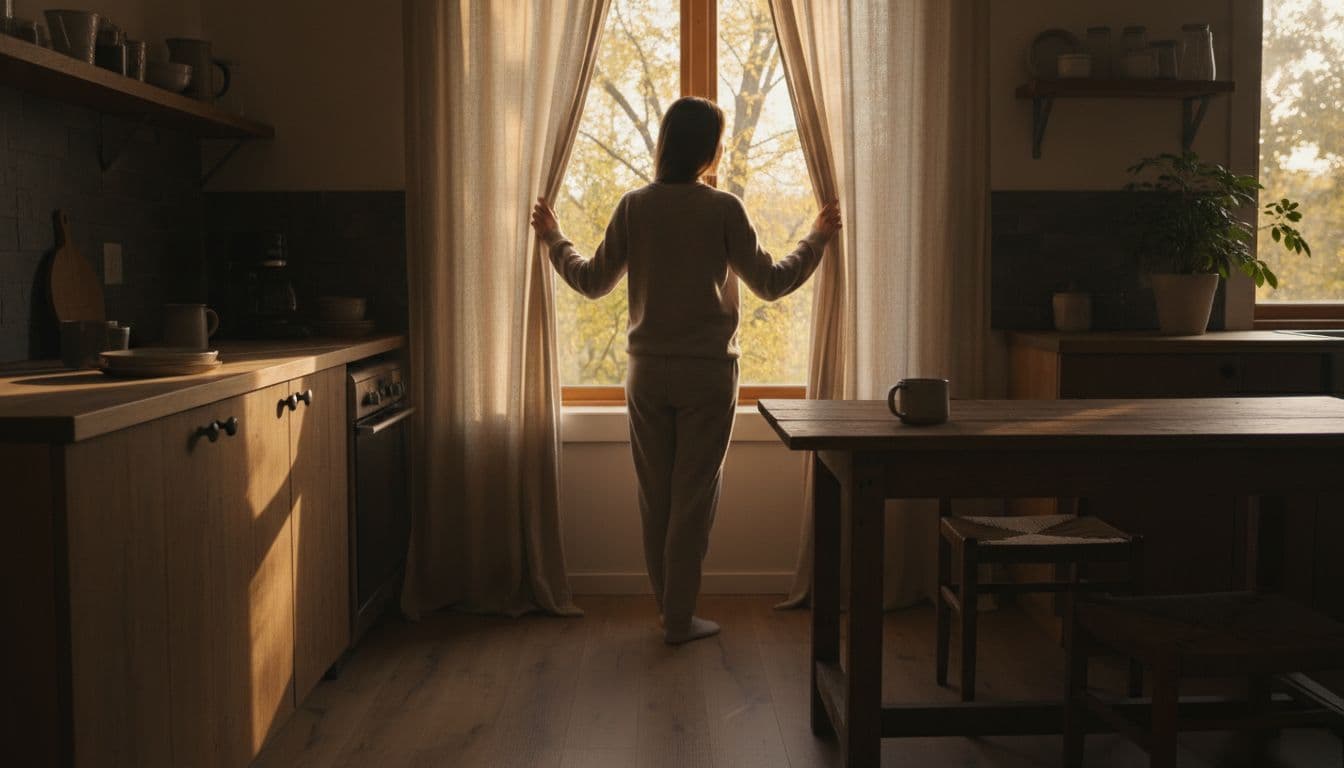
Caption: Early morning light in the kitchen helps set the body clock before the day gets noisy.
Make evenings dim and screen time less stimulating
Tip 3 is to lower light after sunset. Use lamps instead of overheads. Keep the room warm and soft, not bright like a grocery aisle.
Tip 4 is to make screens less exciting. You do not need to throw your phone into Lake Michigan. But switch from doomscrolling and fast video to something plain, like a paper book, music, or a low-stakes show. Blue-light filters can help a bit, but the bigger issue is stimulation.
Keep your bedroom cool, dark, and quiet
Tip 5 is to make the room feel sleepy on purpose. A cooler room, blackout curtains, a fan, earplugs, or a sleep mask can all help. The NCCIH page on sleep and complementary health also points to a quiet, cool, dark room as part of healthy sleep habits.
Tip 6 is to protect the bedroom from wakeful habits. If the bed becomes your office, snack bar, and streaming lounge, the brain starts to pair it with alertness.
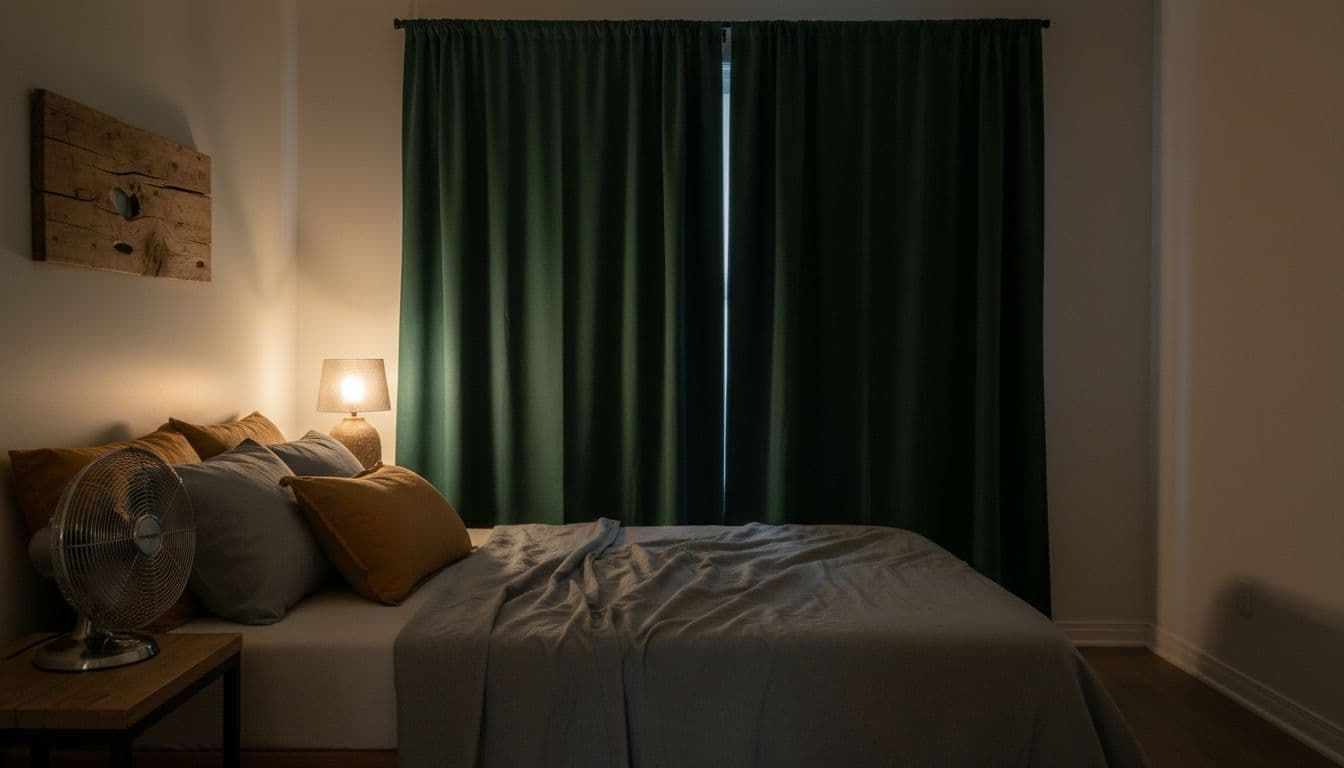
Caption: A cool, dark, quiet room gives the body fewer reasons to stay on guard.
Move your body during the day, not right before bed
Tip 7 is daily movement. A brisk walk, yard work, stretching, or strength training all count. Recent reporting that summarized 2026 sleep research also points to exercise as one of the strongest natural ways to improve slow-wave sleep, which is the deepest stage of the night.
Tip 8 is to watch late caffeine. For some people, afternoon coffee is fine. For others, a 3 p.m. cup is a midnight houseguest. If your mind races at night, test an earlier cutoff for a week.
Choose a lighter evening routine that helps your mind slow down
Tip 9 is to go lighter at night. Heavy meals, late alcohol, and a pile of sugar can make sleep feel rough and choppy.
Tip 10 is to give your mind one quiet landing spot. Read a few pages. Write a short to-do list for tomorrow. Take a warm shower. Enjoy calm music. Or try slow breathing. Look, it’s not a magic pill. But it helps stop the mental gears from grinding.
A first-hand truth many of us learn the hard way is this: the brain likes cues. When the same quiet sequence happens night after night, it starts to trust that sleep is next.
Build a simple night routine that actually sticks
This is where clean-label sleep support starts to make sense. A routine works best when it is short, repeatable, and a little comforting. If it takes 14 products and a spreadsheet, it will not survive a busy week.
A quick 20-minute reset before bed
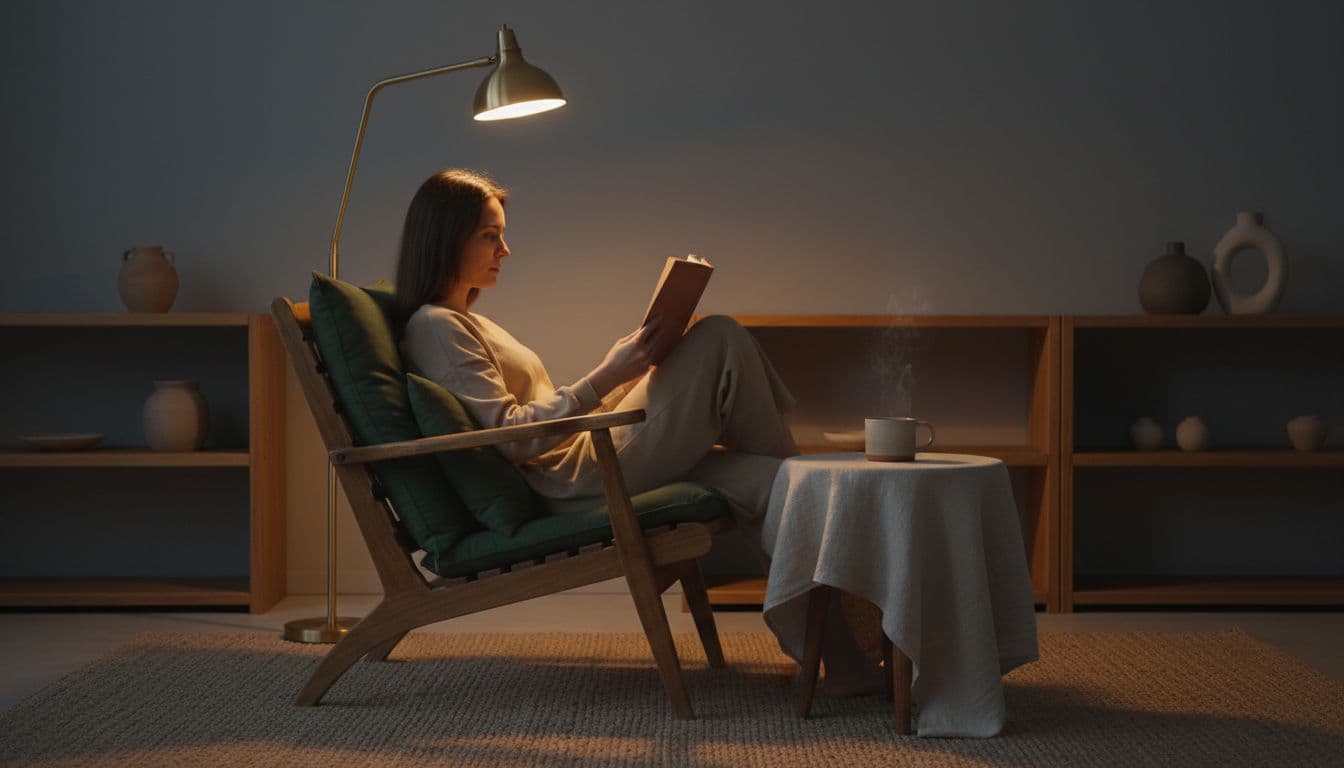
Caption: A short wind-down ritual can help the mind stop sprinting long before your head hits the pillow.
Try this simple flow:
- Dim the lights in your main room.
- Wash up and change into sleep clothes.
- Enjoy a warm, non-caffeinated drink.
- Read or journal for 10 minutes.
- Get in bed at roughly the same time each night.
If you like the idea of a bundled wind-down, the Complete Nightly Sleep Ritual shows how some people pair tea, a sleep mask, and a fixed routine to make bedtime feel easier.
How to tell if your routine is helping
Give it 7 to 14 days. The first signs are often subtle. You may fall asleep with less tossing. You may wake up fewer times. Or the morning fog may lift a notch, like the mental gears finally click into place.
That kind of progress counts. Better sleep often arrives like spring in the Mid-West, slow at first, then all at once.
Self-assessment checklist: what your sleep pattern might be telling you
Use this as an educational snapshot, not a diagnosis.
| What you’re noticing | Your body might be signaling | Try first |
|---|---|---|
| You feel tired at night but not sleepy | Light timing may be off | Get outdoor light early and dim evenings |
| You wake up wired at 3 a.m. | Stress may still be riding shotgun | Keep lights low, read briefly, return when sleepy |
| Bedtime changes every night | Schedule drift may be the issue | Anchor your wake time |
| You fall asleep late after scrolling | Stimulation may be crowding out sleep cues | Cut screens 30 to 60 minutes before bed |
| You sleep but wake dull and heavy | The room or routine may need work | Cool, dark, quiet bedroom and lighter dinners |
If you checked two or more rows, you may be experiencing the “overlit and overstimulated” pattern. If three or more fit, your body might be signaling that timing, not effort, is the main problem.
When natural sleep support may be worth exploring
Sometimes habits need a little company. Plant-based options can fit a gentle bedtime routine, especially when the focus stays on rhythm, comfort, and clear labels. Think magnesium-rich foods, calming herbal teas, or simple wellness products that don’t turn your nightstand into a chemistry set.
What to look for in a sleep-friendly product
Keep it plain. Look for simple ingredients, third-party testing, and a brand that tells you what is inside and why. Trust grows when labels are easy to read and the company is easy to find.
Featured snippets
- NCCIH on mind and body practices for sleep reviews relaxation, mindfulness, and other non-drug approaches.
- NCCIH on sleep and complementary health explains how lifestyle habits and complementary options fit together.
A thoughtful note on CBD, mushrooms, and other plant-based options
Some people enjoy these as part of an evening wind-down. Others feel no difference. Responses vary, so start low, stay observant, and keep your expectations sensible. Habits still matter most, because sleep is a whole-routine issue, not a single-ingredient issue.
Conclusion
Deep sleep without melatonin is often built the old-fashioned way—with steady cues, calmer evenings, and a room that feels safe to rest in. Small habits may look humble, but they can change how a Tuesday morning feels. We do not need a perfect ritual; we need one we can repeat consistently. That is where better sleep starts.
Exclusive Community Offer
Visit CalmlyRooted.com today and get an exclusive discount on your first order. Use WELLNESS27 at checkout to instantly save 27% OFF your entire purchase. Plus, unlock FREE Shipping on any order over $49.95!
We’d love to hear your perspective! Whether you have a question about building your ritual or a personal story to share, leave a comment below—your insight helps our entire community grow and stay rooted together.
Published By: