No products in the cart.
Powerful Benefits of Nootropics and Adaptogens for Stress and Deep Sleep
Your day might start with a phone alarm, jump straight into messages, and end with your brain still scrolling at midnight. Add deadlines, family stuff, and uneven sleep, and it can feel like your body never gets the memo that it’s safe to relax. That’s where adaptogens, nootropics and functional mushrooms come in, not as a magic fix, but as steady support that helps your system handle stress with a little more balance.
Key Takeaways
- Adaptogens are herbs, roots, and some mushrooms that support stress balance over time.
- Match the adaptogen to your stress pattern (sleep trouble, brain fog, low stamina, wired at night).
- Ashwagandha is a common starting point for stress and sleep support (often 300 to 600 mg/day).
- Safety matters, check quality, start low, and be cautious with meds, pregnancy, and thyroid issues.
- Many people notice small shifts in 1 to 2 weeks, with a clearer read around 4 weeks.
My personal approach is simple: I try one adaptogen at a time, and I track sleep, mood, and energy for 14 days so I’m not guessing.
Adaptogens 101: What they are, and why your body cares
Adaptogens are natural ingredients, usually herbs, roots, and certain functional mushrooms, that help your body respond to stress and return to a more even state. Think of them like a thermostat, they don’t force “calm” or “energy,” they support your ability to adjust.
This matters because modern stress is rarely one big event. It’s more like a constant drip: notifications, long workdays, light exposure late at night, rushed meals, and not enough recovery. Over time, that stress load can show up as tension, fatigue, low mood, trouble sleeping, or that “fried but still wired” feeling.
Adaptogens may help support:
- Stress-related tension and irritability
- Energy that feels steady, not spiky
- Sleep quality and wind-down routines
- Focus and mental clarity, especially when stress is the main driver
Adaptogens can’t:
- Replace therapy, lifestyle changes, or medical care
- Fix severe anxiety on their own
- Cancel out chronically poor sleep, heavy drinking, or nonstop overwork
They’re best as part of a routine that includes sleep basics, movement, and real food.
How adaptogens work with your stress system (HPA axis)
Your stress system often gets explained with one simple pathway: the brain signals the adrenal glands, and cortisol is one of the hormones released to help you respond. This pathway is called the HPA axis.
When stress keeps coming, that system can get stuck in “on” mode, or swing between feeling exhausted and feeling keyed up. Adaptogens are described as “normalizers” because they aim to support balance rather than act like a strong stimulant or sedative.
What counts as an adaptogen, and what is just hype
A true adaptogen is usually described with a few common traits: it supports stress resistance, it helps the body trend back toward balance, and it’s generally safe at typical doses for most people.
That said, supplements are a mixed bag. Research strength varies by ingredient, product quality varies by brand, and labels don’t always tell the full story. Some mushrooms are also used as adaptogens when they support stress resilience, for example reishi for calm and sleep support.
If you want a quick way to ground your choices in research, this systematic review and meta-analysis on ashwagandha, cortisol, and stress outcomes is a helpful starting point.
Best adaptogens for modern stress: choose based on how stress shows up for you
A smart way to pick an adaptogen is to start with your “stress profile.” What do you feel most: worry and poor sleep, brain fog, low drive, or nighttime wiredness?
One note on timing: some people feel subtle changes in 1 to 2 weeks, like fewer evening spirals or a smoother morning. A more honest assessment usually takes about 4 weeks of consistent use.
If your stress feels like worry, tension, or poor sleep: Ashwagandha
Ashwagandha is often used for stress support and sleep quality. In research, it’s been linked with improvements in stress-related measures, and some studies show cortisol reductions. In certain trials, cortisol dropped by up to about 30 percent, but results vary by person, dose, and product.
A common study-based dose range is 300 to 600 mg per day of ashwagandha root extract.
Practical tips that make it easier to stick with:
- Take it with food if your stomach is sensitive.
- Consider an evening dose if your main goal is sleep support.
- Look for products that list standardization, such as withanolides, so you know what you’re getting.
Experience note: When I tried ashwagandha, I tracked sleep quality and morning energy, and I only changed that one thing so the signal was clear.
If you want more detail on the research landscape, this Ashwagandha systematic review at Cambridge Core is a solid reference.
If your stress feels like burnout and brain fog: Rhodiola and Lion’s Mane
Some stress doesn’t feel emotional, it feels like you’re running on fumes. You sit down to work and your brain slides right off the task.
Rhodiola rosea is often used when stress shows up as fatigue, reduced performance, or a “too much on my plate” feeling. Typical dose ranges used in studies are around 200 to 600 mg per day of extract. Many people describe it as cleaner than caffeine, meaning less jitters and less of a crash, but it still isn’t a free pass to skip sleep.
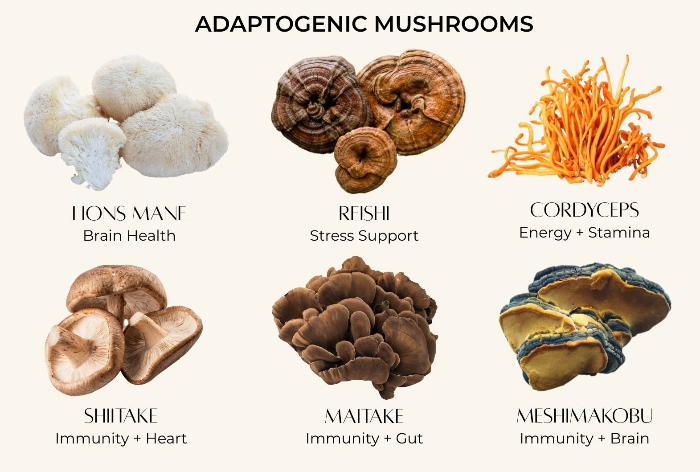
Lion’s Mane is a functional mushroom used for focus and mental clarity, and it often comes up in conversations about nootropic mushrooms. A common dose range is 1 to 3 grams per day, depending on whether it’s a powder or an extract and how concentrated it is. Cortisol-specific data is more limited here, but cognitive and mood outcomes are being studied.
For context, this pilot study on lion’s mane, cognitive function, stress, and mood shows why it’s getting attention, even as research continues to develop.
A simple pairing strategy:
- Try one first (rhodiola or lion’s mane).
- Give it 2 weeks before stacking.
- If you stack, keep doses moderate so you can still tell what’s doing what.
If you’re exploring mushroom options, you can explore lion’s mane and reishi powders and compare formats like gummies, chews, capsules, and powders.
If your stress feels like low stamina and low drive: Ginseng and Holy Basil
Some people don’t feel “anxious,” they feel flat. Motivation drops, workouts feel harder, and even small tasks feel heavy.
Ginseng (often Panax ginseng) is used for energy, vitality, and stamina support. A typical supplemental dose range is 200 to 400 mg per day of extract. Many people prefer it earlier in the day, especially if they’re sensitive to anything that might feel energizing.
Holy basil (tulsi) is more about calm focus and a steady mood. It’s the kind of support people reach for when they want to feel grounded, not sedated. Common dosing is 300 to 500 mg per day of extract, or it can be used as tea.
Quick cues that help you choose:
- Pick ginseng if your stress looks like low drive and low daytime energy.
- Pick tulsi if you want gentle calm and a more even mood.
If your stress shows up as wired at night: Reishi for nighttime calm
If your body is tired but your brain wants to hold a meeting at 11:47 pm, a calming adaptogenic mushroom may fit your routine.
Reishi is often used for relaxation and sleep support. It’s not meant to knock you out. It’s more like turning the volume down so your normal wind-down habits actually work. A common dose range is 1 to 3 grams per day of reishi extract.
Easy ways to use it:
- In an evening tea
- Stirred into a warm drink
- In capsule form if you want no taste
Quality matters with mushrooms. Look for clear sourcing and testing, and avoid products that don’t state what part of the mushroom they use.
If you like powders, Reishi Mushroom Powder is one option to keep your wind-down routine simple. For daytime focus support, Lions Mane Mushroom Powder is an easy format to add to coffee or smoothies.
How to use adaptogens safely and get real results
Adaptogens work best when you treat them like a routine, not a rescue. That means you pick one, take it consistently, and watch how your body responds. If you keep switching products every three days, everything will feel random.
Also, it’s worth saying out loud: if you’re pregnant, nursing, taking medications, or managing a chronic condition, talk with a qualified clinician first.
A simple 2 to 4 week “one change at a time” plan
This is the simplest plan that still gives you useful feedback:
Week 0 (set your baseline): Keep your routine the same for a few days, then pick one adaptogen.
Weeks 1 to 2 (start low and stay steady): Use the low end of the dose range and take it daily.
Weeks 3 to 4 (adjust if needed): If you’re doing well and want more support, move toward the middle of the dose range. If you feel off, pull back or stop.
Track just 3 markers:
- Sleep (how long it takes to fall asleep, and how often you wake)
- Mood (steady, tense, flat, or irritable)
- Energy (morning, afternoon, evening)
Experience datapoint: I tracked sleep onset time, nighttime wake-ups, and afternoon energy for two weeks, and it helped me spot patterns fast.
Quality checklist: what to look for on labels (and what to avoid)
Supplement quality can vary a lot, and in the US, supplements are not FDA-approved the same way medications are. Your best defense is a label check and buying from brands that show their work.
Look for:
- Third-party testing (heavy metals, microbes, potency)
- Clear extract details (part used, ratio, mg per serving)
- Standardized actives when relevant (example: withanolides in ashwagandha)
- Straight answers on sourcing (where it’s grown, how it’s processed)
Be cautious with:
- “Proprietary blends” that hide exact doses
- Products that promise instant results
- Formulas that combine too many ingredients, making it hard to track effects
Who should be careful, common side effects, and medication interactions
Most people tolerate adaptogens well at normal doses, but “natural” can still cause side effects.
Common mild side effects can include:
- Stomach upset
- Headache
- Changes in sleep (too sleepy, or too alert)
Use extra caution and get medical advice if you are:
- Pregnant or nursing
- Managing thyroid concerns (ashwagandha can be a special consideration here)
- Living with autoimmune conditions
- Taking blood pressure or blood sugar medications
- Using sedatives, sleep meds, or anti-anxiety medications
If you notice new or worsening symptoms, stop and check in with a clinician.
Ready to Find Your Functional Nootropic Mushroom Calm?
Ready to Find Your Functional Nootropic Mushroom Calm? Every solution starts here. Shop our curated collection of Functional Mushroom products today, and use WELLNESS27 at checkout to instantly save 27% OFF your entire purchase. Plus, unlock FREE Shipping on any order over $49.95.
You can start by browsing the full collection here: Shop functional mushroom supplements
Conclusion
Modern stress is loud, and it stacks up fast. Adaptogens can support stress balance when you use them consistently and keep your basics strong, especially sleep, food, and movement.
The most practical approach is matching the adaptogen to your stress type, then following a 2 to 4 week plan where you track sleep, mood, and energy. If you want a common starting point, ashwagandha is often chosen for stress and sleep support, while nootropic mushrooms like lion’s mane can fit when focus and brain fog are the bigger issue.
Pick one option, start low, and give it time to show you what it can do. If you’re on medications or managing a health condition, loop in a qualified professional so you can move forward with confidence.
Published By:

David Moore
David Moore, CCBDC™, is your Certified CBD Consultant and a trusted voice in holistic wellness. He delivers science-backed, comprehensive content on CBD, functional mushrooms, and adaptogens, specializing in effective solutions for common issues like stress, anxiety, muscle tension, and sleep. Drawing on expertise from the CBD Training Academy and Cannabis Training University, David uses AI-enhanced insights to give you the ultimate clarity and confidence to master your plant-based health journey.