No products in the cart.
How to Instantly Reset Your Nervous System with Tea

The Calm Collective Blog is the educational heart of CalmlyRooted.com, a premium functional wellness company in West Bloomfield, MI, specializing in plant-based, root-cause solutions for systemic health and wellness. Last Updated: April 28th, 2026.
You know the hour. The laptop is still open, the evening light is fading, and your body is home but your mind is still at work. If you live in go mode, a simple tea ritual can become the cue that tells your system the rush is over.
TL;DR: Tea can help calm the body because the ritual uses warmth, aroma, sight, touch, and slow sipping to signal safety. For many of us, nervous system regulation starts with repeatable cues, not heroic self-control.
Key Takeaways
- Tea works best as a sensory routine, not only as a drink.
- Warmth, scent, steam, and a slower pace can help the body soften.
- A 5 to 10 minute evening ritual often works better than trying to “relax” on command.
- The ritual itself may matter as much as the herbs, because the body trusts repetition.
*This article is a deep-dive chapter of our Nightly Sleep Hygiene Guide: Simple Rituals for a Better Life. Explore the full guide to master your evening transition and find your calm.
When we talk about nervous system regulation in plain English, we mean helping the body shift out of alert mode and into a steadier state. That is why this matters for burned-out professionals. We do not need a grand fix at 9:12 p.m., we need a believable off-switch.
How to calm your nervous system with tea
Tea can calm your nervous system by pairing a warm drink with repeatable sensory cues that slow your pace. In practice, the mug, the steam, the scent, and the act of sitting down tell the body that work is done and recovery can begin.
That works better than barking “relax” at yourself. Willpower is loud and late. Sensory cues are quieter, and they reach the body faster.
A tea ritual helps because it repeats the same message every night. Warm hands, a familiar aroma, low light, and slower sipping create a pattern. Over time, the mug becomes a boundary marker between performance mode and recovery mode. For many burned-out adults, that sequence matters as much as the tea itself. The nervous system responds to predictability, not only ingredients.
Fact-Density
- A PubMed systematic review on oral chamomile and anxiety found multiple clinical trials suggesting chamomile may support a calmer state.
- A long-term chamomile clinical trial on PMC looked at chamomile use over time in adults with anxiety-related symptoms.
Why your senses can switch off stress faster than willpower alone
The body notices safety cues before the mind writes a neat story about them. You see steam rise. You smell chamomile or lavender. You feel ceramic warmth in your palms. You hear the kettle click off. Those are small signs, but the body is built to read small signs.
This is why sensory rituals often land better than self-lectures. If you are fried after a long day, reasoning with yourself may feel like opening one more spreadsheet. A warm cup asks less.
Heart rate variability, often shortened to HRV, is one simple measure of the tiny changes between heartbeats. In general, more variability tends to go along with a calmer, more adaptable state. We do not need to track it at night to benefit from the ritual, but it helps explain why a softer body usually comes before a quieter mind.
What makes tea different from another evening habit
Tea gives the body grounding without asking it to rev up, numb out, or keep performing. Doomscrolling keeps the brain on a leash. A late glass of wine can feel relaxing at first, but it is not the same as a gentle landing. Working through dinner is still work, even if the plate is nearby.
Tea is simpler. It has warmth, scent, and built-in pacing. You cannot gulp a hot mug while replying to six Slack messages, at least not without insulting both the tea and your throat.
That is part of why it helps. Tea slows the evening on purpose.
Build a tea ritual that tells your body it is safe to soften
The goal is not perfection. The goal is consistency. Five to 10 quiet minutes can be enough to start a real shift in nervous system regulation, especially if you keep the steps the same and keep screens out of the picture.
- Choose a caffeine-free blend that fits the hour and your mood.
- Warm your mug and your hands before you sit down.
- Steep the tea fully, instead of rushing it like one more task.
- Breathe for three slow breaths while the aroma rises.
- Sip in low light, with your phone facedown or out of the room.
- Repeat the same sequence most nights, so the body learns the cue.
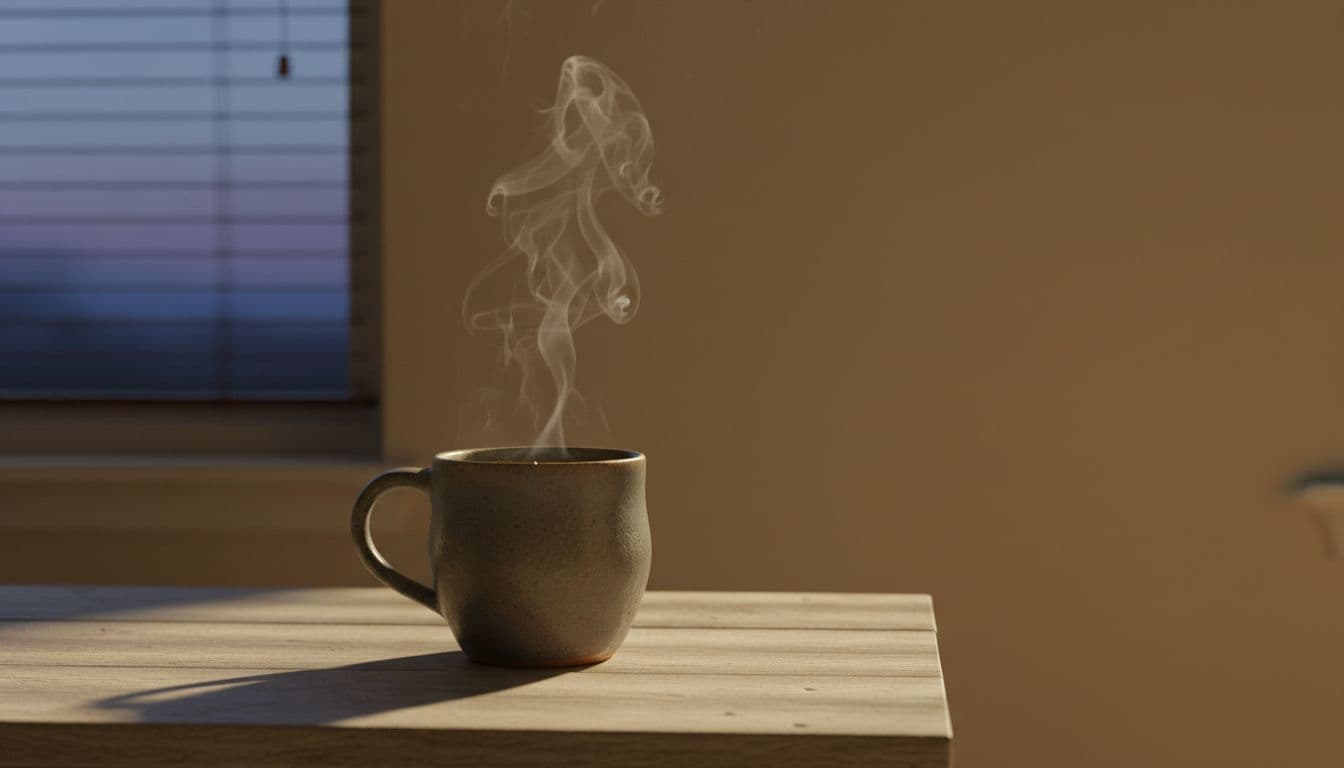
Caption: A warm mug in low light can cue the evening transition before your mind fully catches up.
Pick the right blend for the kind of calm you need
Different evenings call for different kinds of support. If your thoughts are racing, chamomile, lavender, and lemon balm often feel soft and settling. If the day left you tense and wrung out, tulsi can feel grounding. If you want a gentle bridge between stress and sleep, caffeine-free blends usually fit best.
For readers who want a ready-made option built around that nighttime use case, the CBD Sleepy Buddha Tea Blend fits naturally into this kind of evening routine because it centers chamomile and lavender in a steep-and-sip ritual.
Ashwagandha also comes up often in plant-based wellness conversations. People tend to reach for it when the day has felt like a lot. Still, the best blend is the one you will actually enjoy and repeat.
A 7 minute nightly reset for the overworked mind
If you say you are too busy for rituals, keep this one short. Sit down. Put both feet on the floor. Hold the mug with both hands for one full breath. Let your eyes rest on the steam or the cup, not the screen across the room.
Take three slower breaths than usual. Then sip without multitasking. Notice the first taste, the heat, and the drop in pace. Keep your shoulders loose and your jaw unclenched.
Look, it is not a magic fix. But a small off-switch, used nightly, can change the tone of your evenings.
The herbs, aromas, and textures that make the ritual work
Certain herbs show up again and again in evening tea because people find them settling, pleasant, and easy to build into a bedtime routine. The sensory part matters too. Taste, scent, and warmth help shape the experience, which is why tea often works as a full-body cue instead of a plain beverage.
Fact-Density
- A systematic review on PMC looked at oral chamomile and anxiety across clinical studies.
- A randomized trial comparing lavender and chamomile herbal tea explored how these familiar plants affected mood-related outcomes.
- A Journal of Clinical Psychopharmacology abstract reported on a placebo-controlled chamomile trial.
Chamomile, lavender, and tulsi in plain English
Chamomile feels soft. It is the tea version of lowering the house lights.
Lavender helps the room feel quieter, even before the first sip. The scent does part of the work.
Tulsi, also called holy basil, often feels grounding when your brain is still chewing on the day. It is not sleepy in the same way chamomile can be. It feels steadier, like your internal pace stops tripping over itself.
Green tea deserves one note here because of L-theanine, which is often discussed in relation to calm focus. Still, regular green tea has caffeine, so it is usually a better daytime option than a bedtime one.
Why warmth, scent, and slow sipping help the body downshift
Warmth in the hands can feel reassuring. Scent in the air changes the mood of a room fast. Slow sipping breaks the stress loop because it forces a pace that stress does not like.
That matters after a long workday. Burnout often has a physical rhythm, tight jaw, shallow breath, restless hands, fridge wandering. Tea interrupts that rhythm with a new one.

Caption: Steam, scent, and warmth can act like calming signals when the day has been loud.
A simple reset for burnout, backed by real life and real routines
Here in West Bloomfield and across southeast Michigan, we hear a version of the same story all winter long. Gray afternoons roll into dark evenings, and work keeps hanging around the kitchen like it pays rent.
What changed when one nightly cup became a real boundary after work
Consider a composite example: a project lead in her 40s, still checking email after dinner, eating snacks she did not want, and heading to bed tired but wired. She started a seven-minute tea routine after shutting her laptop. Same mug, same chair, same blend, same lamp.
The change was modest at first. Fewer nights of laptop linger. Fewer kitchen laps. A smoother walk into bed. After a few weeks, the cup itself began to mean “we are done now.”
One of us had a similar moment on a quiet drive through West Bloomfield after a packed day. The fix was not more discipline. It was a plain evening sequence that the body could trust. That is also why a simple nightly reset with calming tea can help some people build a stronger end-of-day boundary.
The common mistakes that keep a calming ritual from feeling calming
The biggest mistake is doing the ritual while still working. Tea cannot signal safety if your inbox is still barking.
Another issue is choosing a strong caffeinated blend at 8:30 p.m. Then there is the rushed steep, which turns a calming act into a pit stop.
And sometimes we expect one cup to erase months of stress. It will not. What it can do is create one honest moment of downshift, then another, then another.
Try this quick tea ritual check-in tonight
Use this before you make your tea.
| Check-in | Mark |
|---|---|
| [ ] My jaw feels tight | |
| [ ] My breathing is shallow | |
| [ ] My mind is still at work | |
| [ ] I am snacking without real hunger | |
| [ ] I feel tired but wired |
If you checked 1 to 2, your body might be signaling mild carryover stress. Keep the ritual simple and screen-free.
If you checked 3, you may be experiencing evening overdrive. Choose a stronger boundary, dim lights, full steep time, no email.
If you checked 4 to 5, your body might be signaling full-day spillover. Make the tea, sit down, and cut stimulation. Skip the phone, skip the catch-up tasks, and keep the mug in both hands for a minute before the first sip.
Conclusion
When the workday keeps humming inside your chest, a warm mug can become a believable cue that rest is allowed. That is the heart of nervous system regulation in real life, small, repeatable signals that help the body soften.
Start with one cup, one chair, one short window of quiet. Then let the ritual do what force usually cannot.
Start Regulating Your Nervous System Today:
Activate Your Nightly Reset Bundle and flip the switch from high-stress to deep calm. Use code WELLNESS27 at checkout to save 27% OFF your entire first order.
Plus – unlock FREE Shipping on every order over $49.95. Your ritual starts here.

Published By: