No products in the cart.
How to Master a Blue Light Detox to Lower Evening Cortisol
The Calm Collective Blog is the educational heart of CalmlyRooted.com, a premium functional wellness company in West Bloomfield, MI, specializing in plant-based, root-cause solutions for systemic health and wellness. Last Updated: April 13th, 2026
You know the feeling. Your body is tired, your eyes are dry, and yet your brain is still tap dancing after 10 minutes of late-night scrolling under a bright phone screen.
TL;DR: A Blue Light Detox helps lower evening cortisol by reducing bright, blue-heavy light before bed, so your brain gets the message that night has started and it’s time to power down.
Key Takeaways
- Cortisol should rise in the morning and fall at night.
- Blue-heavy light can delay that evening drop.
- Phones are part of the story, but room lighting matters too.
- Even 30 to 60 minutes of dimmer, warmer light can help.
- This is educational, not medical advice.
*This article is a deep-dive chapter of our Nightly Sleep Hygiene Guide: Simple Rituals for a Better Life. Explore the full guide to master your evening transition and find your calm.
How does blue light affect cortisol at night?
Blue light can keep evening cortisol more active by telling your brain it’s still daytime. That matters because your brain uses light as a clock signal. When bright, blue-heavy light hits the eyes after sunset, it can delay melatonin and keep your system more alert than you want at bedtime.
In plain English, your body reads light before it reads your to-do list. A phone, tablet, laptop, smart TV, or bright LED bulb can all send the same message: stay on, keep going, don’t shut the shop yet.
Effects vary by person, brightness, timing, and how long you’re exposed. Still, the pattern is consistent enough that the science is worth respecting. In one study on red and blue light effects, blue light changed nighttime melatonin and cortisol patterns more than red light. A separate paper on nocturnal light exposure and hormone timing found that nighttime light can shift both melatonin and cortisol responses. And a systematic review of blue-light reduction at night found that reducing short-wavelength light can improve sleep-related outcomes.
Fact-Density
What cortisol is supposed to do in a healthy day-night rhythm
Cortisol isn’t the bad guy. It’s your morning starter motor. In a healthy rhythm, it rises earlier in the day to help you wake up, focus, and get moving. Then it should ease down as evening rolls in, so your body can shift from doing to resting.
That drop is part of the handoff to nighttime biology.
Why late screen time can leave you feeling wired but tired
This is where real life crashes into biology. You answer one email, then watch one episode, then read one text thread that somehow turns into a small courtroom drama. Meanwhile, the room is bright, the screen is close to your face, and your brain gets a second wind it never asked for.
So you end up in that strange state, physically worn out but mentally buzzing. Your shoulders feel heavy, but your thoughts keep jogging laps. That “wired but tired” feeling often isn’t stress alone. It’s stress plus bright light plus stimulation, stacked together at night.
The hidden signs your evenings are too bright
Often, the clue isn’t “I use my phone.” It’s the pattern around it. You feel sleepy on the couch, then wide awake once you head upstairs. You turn off the TV, but your mind keeps glowing. You wake up after a full night and still feel like someone filled your head with packing peanuts.
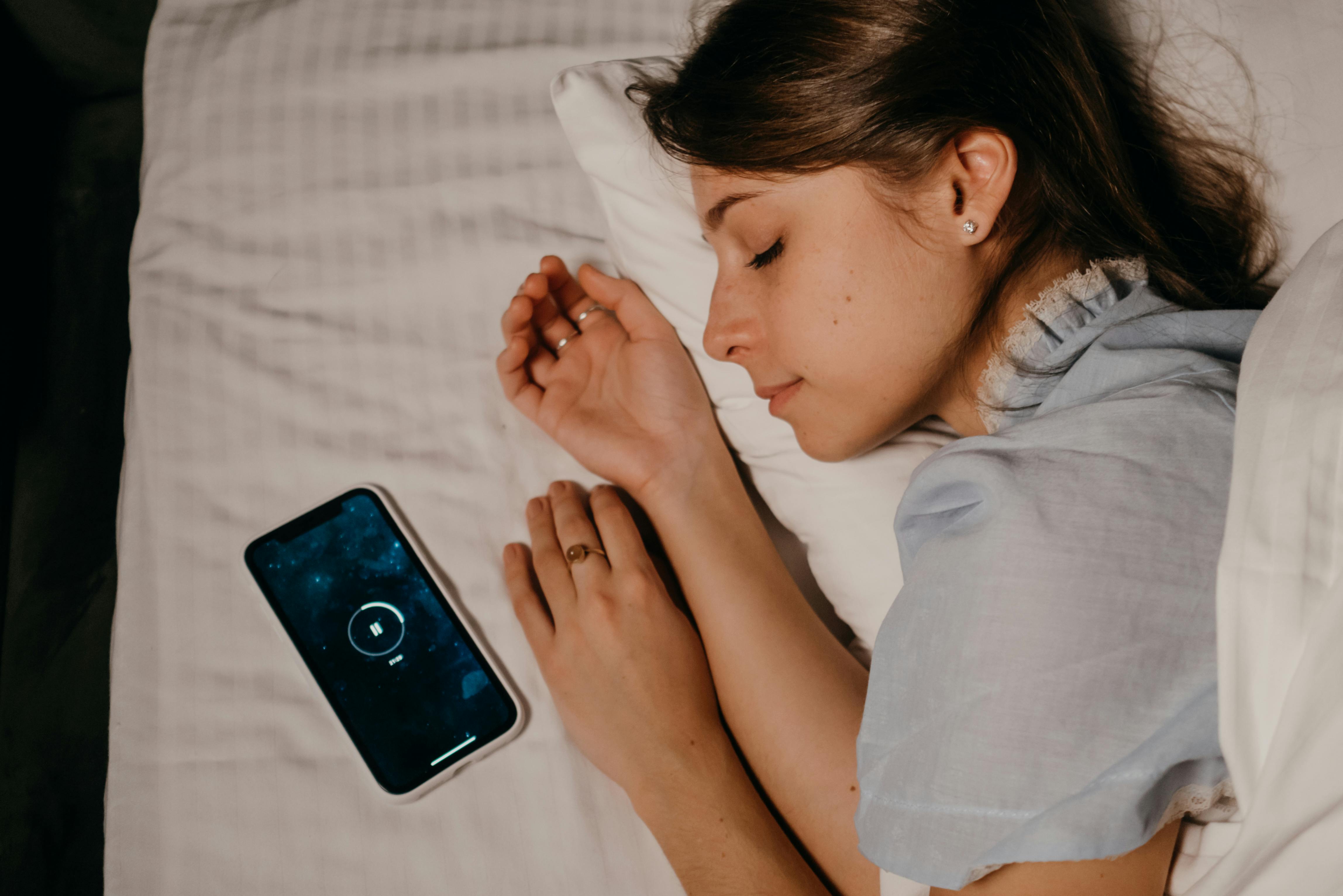
Caption: One bright screen can make the whole room feel like noon.
A quick self-check for your evening light habits
Use this as an educational insight, not a diagnosis.
| Evening habit | Check |
|---|---|
| Overhead LED lights stay on after dark | □ |
| I scroll on my phone in bed | □ |
| I stream shows within an hour of sleep | □ |
| Notifications keep coming after dinner | □ |
| I often wake tired after a long night | □ |
| Your total | Wellness archetype |
|---|---|
| 0 to 2 | Likely low light strain |
| 3 to 4 | Moderate evening light load |
| 5+ | High-stimulation nights |
If you scored high, don’t panic. It doesn’t mean something is wrong with you. It means your evenings may be louder, brighter, and busier than your body likes.
When the problem is not just your phone
Phones get blamed for everything short of bad weather, but they aren’t the whole story. Tablets, laptops, bathroom vanity lights, bright kitchen cans, and huge smart TVs can all keep the “daytime” signal going.
And sometimes it’s the task, not only the light. Late-night spreadsheets, doomscrolling, online shopping, or intense shows all keep the mental gears clicking. The screen is the lamp, but the content is the coffee.
A simple Blue Light Detox routine that helps your body downshift
Look, it’s not a magic pill. But a simple evening shift can help. Even a 30 to 60-minute change gives your brain a cleaner signal that the day is ending.
Here’s a practical HowTo you can repeat without turning bedtime into a part-time job:
- Dim the main lights about an hour before bed, especially overhead LEDs.
- Warm your devices by turning on Night Shift, Night Light, or another amber setting.
- Silence the noise with Do Not Disturb, so every ping doesn’t pull you back into the day.
- Move your phone out of reach, or better yet, charge it outside the bedroom.
- Swap scrolling for something softer, like tea, light stretching, journaling, or a paper book.
- Darken the room fully when it’s time to sleep, because darkness is part of the message too.
For some of us, a ritual works better than rules. That might be a mug of herbal tea, a sleep mask, or a gentle plant-based routine like the Evening Circadian Reset Essentials, because sensory cues help us stop negotiating with the night.
The 60-minute wind-down that lowers light, noise, and mental clutter
Grayscale mode is surprisingly helpful. So is putting the charger in the hallway. Those little bits of friction make mindless scrolling less sticky.
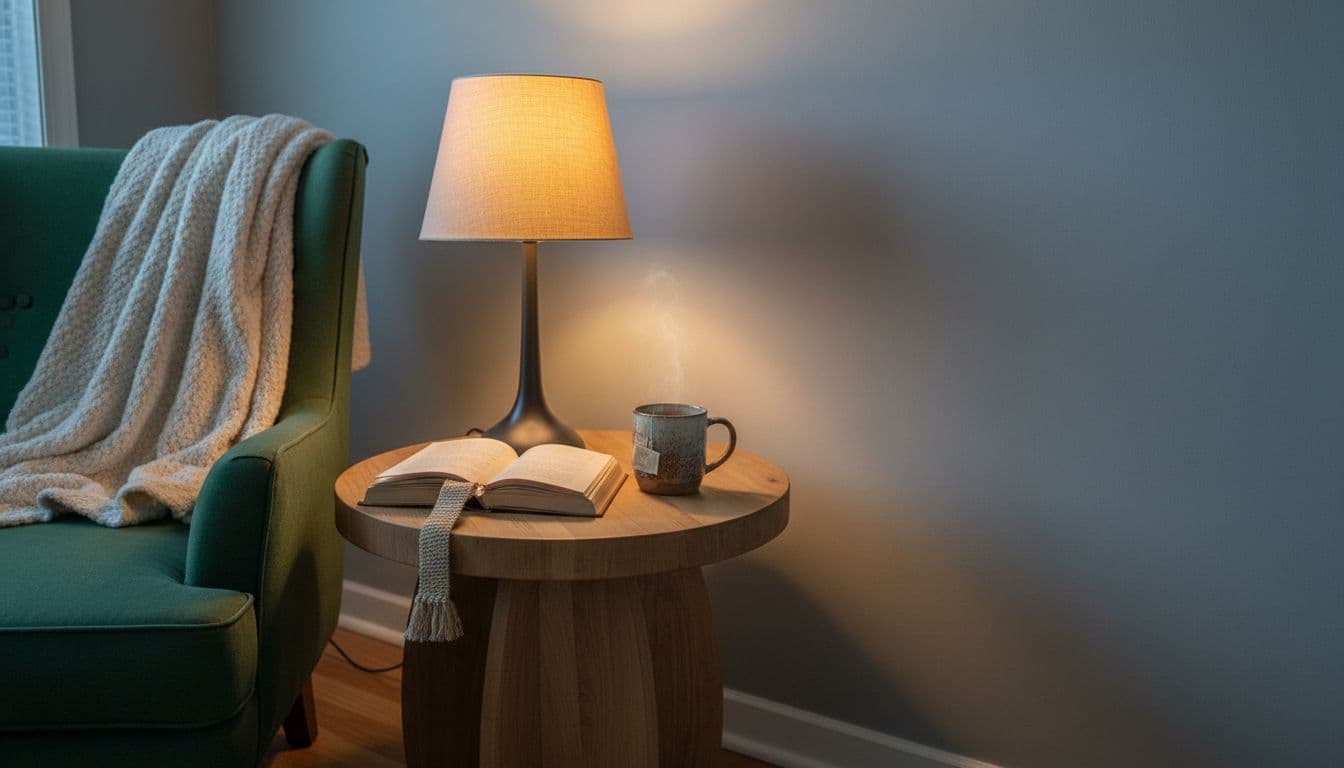
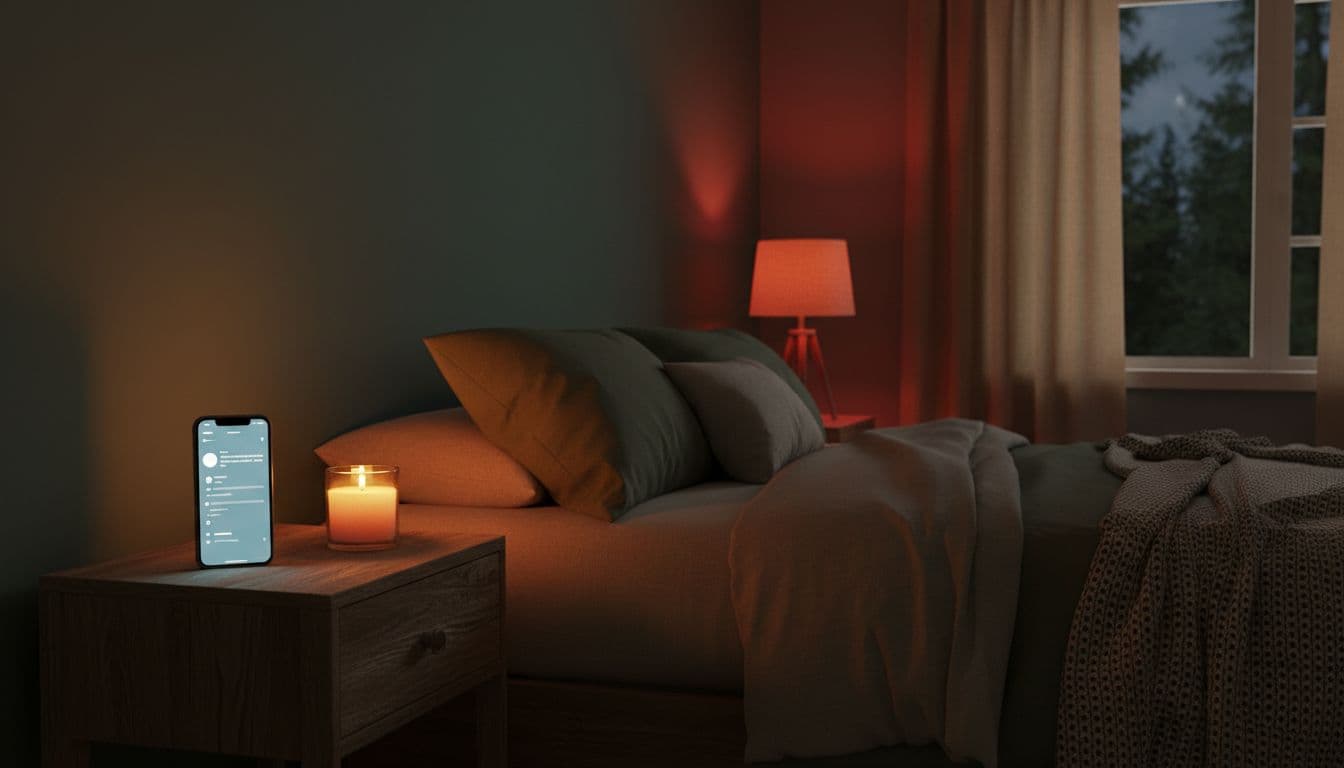
Warm light, quiet cues, and less screen glow help the body downshift.
Why it actually works is simple. You’re lowering light, trimming stimulation, and clearing open loops from your head. In other words, you stop feeding the part of the brain that thinks the day is still in session.
What to do if you have to use screens after dark
Some of us work late. Some of us parent late. Some of us study late because life doesn’t read sleep blogs. So make the screen less harsh. Lower brightness. Sit farther back. Use warmer bulbs in the room. End stimulating content first, then do the boring task last.
A perfect routine is nice. A doable routine is better.
What real people notice after a week of less evening blue light
The first change usually isn’t dramatic. It’s quieter than that. People often notice less bedtime restlessness, fewer late-night second winds, and an easier mental shutoff. Morning can feel less foggy too, like the mental gears click into place sooner.
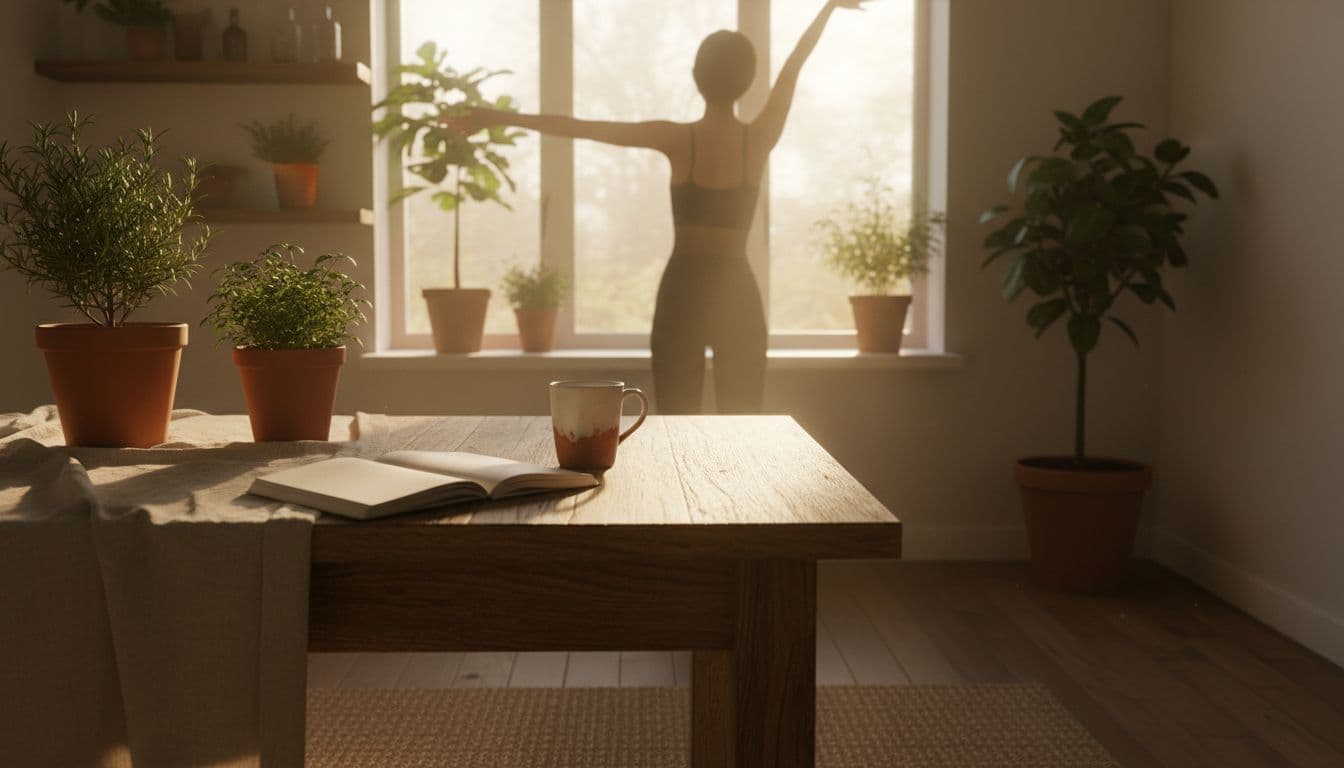
Caption: Better evenings often show up first in calmer mornings.
Here’s the contrarian piece: many high-performers blame stress alone. But often it’s the stack, stress, bright light, and stimulating content, all piled onto the same hour. Remove one layer, and the whole tower wobbles less.
A realistic 7-day experiment for the wired but tired reader
Try this for one week. Days 1 and 2, dim the house lights 60 minutes before bed. Days 3 and 4, add Do Not Disturb and move the phone off the nightstand. Days 5 through 7, swap the last 15 minutes of scrolling for tea, stretching, or a paper book.
Track three things only: when screens stopped, what time you got in bed, and how you felt the next morning. Keep it simple enough that you’ll still do it on a Tuesday.
Why a good routine beats a perfect routine
It took plenty of us a few tries to get the ritual right. That’s normal. Bedtime habits are like old footpaths in the woods. You don’t erase them in one night. You make a better path, then keep walking it.
And if one night goes sideways, welcome to being human. Start again the next evening.
Frequently asked questions about Blue Light Detox and evening cortisol
How long before bed should I start a Blue Light Detox?
A good starting point is 30 to 60 minutes. More can help, but even a shorter window often feels different.
Do blue-light glasses work?
They may help some people, especially if you can’t avoid screens. Still, they work best as one tool, not your whole plan.
Is night mode enough on its own?
Usually not. Warmer screens help, but brightness, distance, content, and room lighting still matter. A smartphone evening light study suggests filters can help, though they don’t erase the full effect of late screen use.
Can room lighting matter as much as my phone?
Yes. Bright kitchen lights, bathroom lights, and TVs can all keep evenings too bright. The phone gets the headlines, but the house often writes the script.
How fast do people notice a difference?
Some notice less bedtime buzzing within a few nights. For others, it takes a week or two of steady habits. Consistency usually matters more than perfection.
If you’ve ever laid in bed exhausted but oddly alert, your problem may not be a lack of discipline. It may be that your brain never got a clear sunset signal.
A Blue Light Detox is simply a cleaner handoff from day to night. Less glare, less mental noise, less bargaining with sleep.
Your Solution Center:
Find Your Nightly Reset Bundle Here and get an exclusive discount on your first order. Use WELLNESS27 at checkout to instantly save 27% OFF your entire purchase. Plus – unlock FREE Shipping on any order over $49.95
We’d love to hear your perspective on this! Whether you have a question or a personal story to share, leave a comment below—your insight helps our entire community grow and stay rooted together.
For a deep dive into every aspect of rest, visit our 2026 Masterclass on Restorative Sleep.
Published By: