
No products in the cart.
Is High Cortisol Killing Your Sleep? How to Fix It

Fact-Checked by the team at CalmlyRooted.com | Last Updated: April 2026
The Calm Collective Blog is the educational heart of CalmlyRooted.com, a premium functional wellness company in West Bloomfield, MI, specializing in plant-based, root-cause solutions for systemic health and wellness.
You know that moment. The house is quiet, your body is tired, and then your brain decides it’s time to sort old memories, unpaid bills, and tomorrow’s lunch. This throws off your circadian rhythm and sleep-wake cycle, as the HPA axis that governs stress responses keeps pumping cortisol when your body should be winding down.
That’s often what a high cortisol night feels like. Cortisol should help us greet the morning. When it hangs around too long after dark, sleep gets delayed, lighter, and easier to break.
TL;DR: High nighttime cortisol can keep your brain and body on alert, disrupting the circadian rhythm and sleep-wake cycle, which delays sleep, triggers night waking, and leaves you groggy the next day.
Key Takeaways
- High cortisol at night can blunt your natural wind-down.
- Sleep may become lighter, shorter, or more fragmented.
- The issue is often mistimed stress, not simply “too much stress.”
- Small evening habits can help the body get the nighttime memo.
What causes high cortisol at night
Cortisol follows a daily rhythm. It should rise in the morning and fall at night. When that rhythm gets scrambled, the body can act like sunrise is coming, even when it’s 11 p.m.
Common triggers include night-shift work and chronic stress, which overstimulate the adrenal glands, bright screens, intense evening exercise, caffeine that lingers, alcohol that rebounds overnight, and swings in blood sugar levels tied to insulin resistance. Also, emotional carryover matters. A tense text, bad news headline, or family stress can keep the nervous system in daytime mode. Hormonal shifts, like perimenopause, can also scramble these signals.
Here’s the contrarian part. For many adults, the real problem isn’t endless stress. It’s stress with bad timing. You can feel fine while answering emails at 9:30 p.m., yet your brain still reads that activity as “stay ready.”
How high cortisol at night disrupts sleep
Cortisol and melatonin work different shifts. When cortisol stays elevated late, it inhibits melatonin secretion, so melatonin has a harder time guiding you into sleep. As a result, you may feel tired but oddly alert, like your body stuck in fight or flight mode, a car idling in the driveway with the headlights still on.
That mismatch can stretch out sleep onset, increase light sleep, disrupt glucose metabolism, and make overnight waking more likely. It can also leave your heart rate a little more “on,” which makes full-body rest harder to reach. In plain English, you might spend enough hours in bed but still wake up feeling like your batteries never charged.
Fact-Density
- A 2024 pilot study in Sleep Medicine found altered nocturnal stress-hormone patterns were tied to sleep-wake states in people with chronic insomnia disorder. Read the study
- An NIH-hosted paper found nighttime cortisol changes were linked with subjective and objective sleep quality in older adults. View the PMC article
- An open-access Springer review on hypercortisolism and Cushing syndrome shows how excess cortisol often travels with sleep disruption. See the review
Signs you’re dealing with high cortisol at night
One common pattern is almost funny, until it keeps happening. You get sleepy on the couch, head to bed, and then your mind starts reorganizing the garage, often with a racing heart or tense muscles keeping you alert.
Other clues include that “tired but wired” feeling with a second wind after 9 p.m., waking around 2 to 4 a.m. feeling switched on, and dragging through the morning with that heavy, cotton-brain fog.
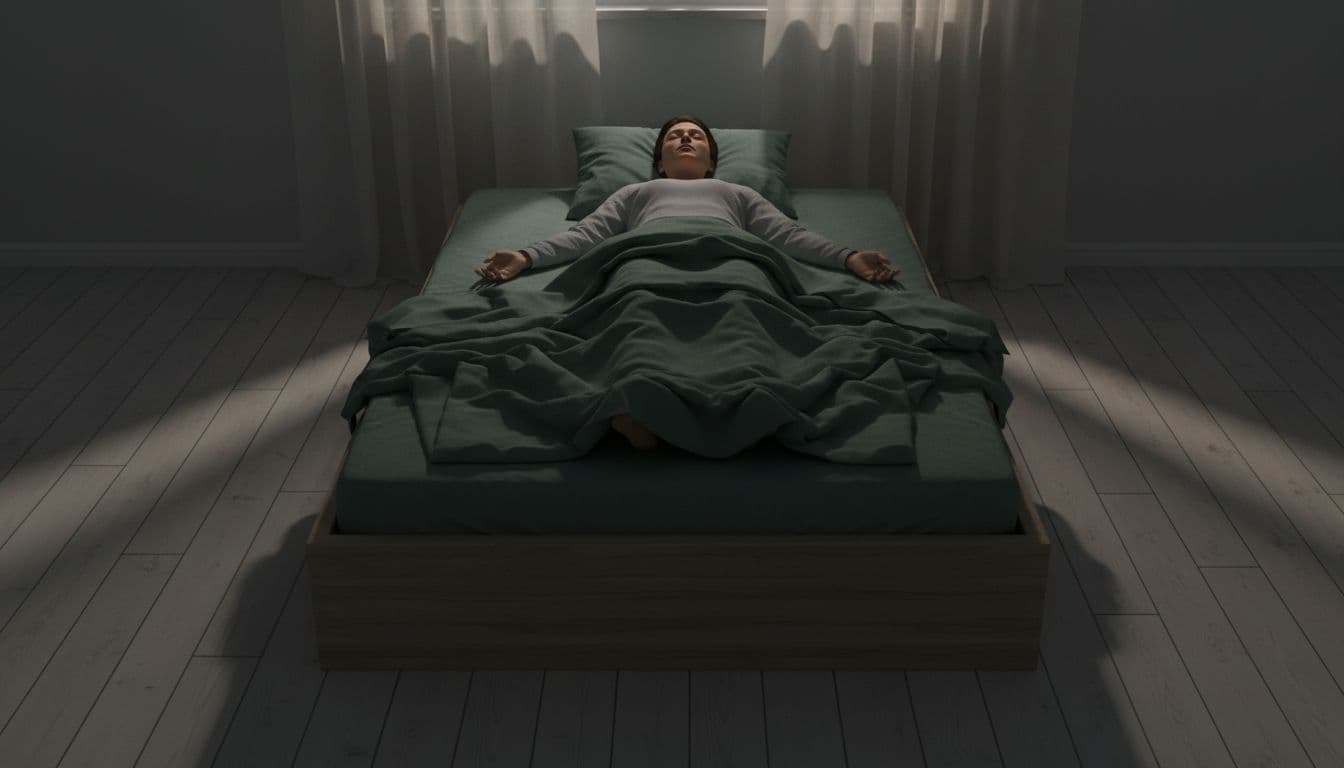
Caption: When the body is tired but the stress rhythm still feels like daytime.
Self-Assessment Checklist
- ☐ You get a burst of energy late in the evening.
- ☐ You feel sleepy before bed, then more alert after lights out.
- ☐ Your thoughts keep solving problems in bed.
- ☐ You wake in the middle of the night feeling “on.”
- ☐ Morning feels foggy even after enough time in bed.
Check 0 to 1, you’re the Early Drifter. Check 2 to 3, you’re the Second-Wind Sleeper. Check 4 to 5, you’re in a Wired-at-Night Pattern. These are educational wellness archetypes, not diagnoses. Persistent patterns like this may also link to long-term concerns such as high blood pressure, weight gain, or sleep apnea.
How to lower cortisol at night
Look, it’s not a magic pill. Most of us need a steady rhythm, not a perfect one. Sleep is a system, and the body notices light, timing, and tension.
- Dim lights 60 to 90 minutes before bed as part of good sleep hygiene. Warm, low light tells the brain the day is closing.
- Close the mental tabs. Write tomorrow’s top three tasks on paper, then stop negotiating with your brain.
- Cut late stimulants. That includes caffeine, doomscrolling, and hard workouts too close to bedtime.
- Create one plant-based wind-down cue using relaxation techniques. A warm, caffeine-free tea, a shower, breathing, or a sleep mask can become your nightly “lights down” signal.

Caption: Gentle sensory cues can help the nervous system stop clinging to the workday.
If you want a simple routine instead of piecing one together, the Complete Nightly Recovery CBD Set brings together a tea ritual, sleep mask, and evening support in one place. Improving nighttime rest this way also supports a healthy cortisol awakening response the following morning. And yes, it can take a few tries to get your ritual right. That’s normal.
Stories from folks like us, and what research echoes
Around Michigan, many of us know this pattern by feel. The dishwasher stops humming, the phone finally goes down, and suddenly your shoulders still feel like it’s 2 p.m. That’s the human side of nighttime stress, a tired body with a watchful brain.
Research keeps echoing that lived experience. High cortisol at night throws stress hormones out of step, so sleep tends to get thinner and less refreshing, while raising risks for metabolic syndrome and cardiovascular disease. Supporting the pituitary gland and adrenal glands proves key to long-term health. While most issues are lifestyle-based, rare cases can involve adrenal tumors, underscoring the value of root-cause solutions. So the goal isn’t to force sleep. It’s to help the body feel safe enough to stop standing guard.

Caption: Better evenings often show up as clearer mornings and less dragging through the day.
Frequently asked questions
Can high cortisol keep you awake even if you’re exhausted?
Yes. That’s the wired-but-tired pattern. Your body wants sleep, but your alertness system hasn’t fully powered down.
Why do I get a second wind before bed?
Late light, mental stimulation, stress, or mistimed habits can push your internal clock later. You feel sleepy, then suddenly more awake.
How long does it take to calm a high cortisol night pattern?
Sometimes a few nights help. More often, it takes a couple of weeks of steady cues, such as dimmer light, less stimulation, and a repeatable bedtime ritual.
How do doctors test for high cortisol?
Doctors often use simple tests like a salivary cortisol test for late-night levels, a 24-hour urine cortisol test to measure daily output, or a dexamethasone suppression test to see how your body responds to stress hormones.
A high cortisol night doesn’t mean you’re broken. It usually means your body is getting mixed signals after dark.
Start with one steady cue tonight. When the brain trusts that night is for rest, sleep has a much better chance to arrive on time.
Your Solution Center:
Find Your Nightly Reset Bundle Here and get an exclusive discount on your first order. Use WELLNESS27 at checkout to instantly save 27% OFF your entire purchase. Plus – unlock FREE Shipping on any order over $49.95
We’d love to hear your perspective on this! Whether you have a question or a personal story to share, leave a comment below; your insight helps our entire community grow and stay rooted together.
Published By: