
No products in the cart.
Restless Legs at Night? Causes & How to Calm Them

The Calm Collective Blog is a curated educational resource by CalmlyRooted.com. We explore plant-based, restorative strategies designed to help you navigate systemic wellness with clarity and intention. Research-Backed Insights | Updated August 2026
Many people recognize the symptoms of restless legs syndrome, a condition that frequently turns quiet evenings into a struggle for comfort. When you are finally ready to sleep, the urge to move can make rest feel impossible to achieve.
When experiencing restless legs at night, it often feels like sleep is just one inch away and somehow out of reach. That frustration is compounded by the fact that the cause is often a stack of triggers, rather than one singular issue. When your evenings are irregular, bright, overstimulated, or tense, your body tends to turn the intensity up.
Need to Know: Nighttime leg restlessness often flares because of low iron, medication triggers, stress, caffeine, and alcohol intake, or uneven sleep habits. Gentle movement, earlier cutoffs, and a steadier evening routine can help, but frequent or worsening episodes are worth discussing with a clinician.
Key Takeaways
- Restless legs syndrome often worsens after dark as the brain’s movement signals shift, leading to an irresistible urge to move your limbs.
- Iron deficiency, certain medications, alcohol, caffeine, and nicotine are common triggers.
- Weekend sleep swings, long naps, and late screens can make leg discomfort feel louder.
- A short wind-down routine usually works better than a heroic one-night fix.
- If you feel this often, ask a clinician to review your ferritin levels, medications, and any underlying sleep issues.
What causes restless legs syndrome?
Restless legs syndrome, also known as Willis-Ekbom disease, typically manifests as an uncomfortable urge to move your limbs while at rest. People often describe these symptoms as a buzzing, tugging, or creeping sensation in the legs. You might even feel a crawling sensation that makes it impossible to get comfortable, especially when you are trying to wind down for the night. It is important to note that these symptoms are distinct from common muscle cramps, which are usually characterized by sharp, involuntary contractions rather than a persistent need for movement.
Several underlying factors contribute to this condition. Iron deficiency is a frequent culprit because iron is essential for the brain to properly regulate dopamine, a chemical messenger that helps control muscle activity and coordination. Genetics also play a significant role, but the condition is frequently associated with other health factors, including pregnancy, diabetes, kidney disease, untreated sleep apnea, venous insufficiency, and fibromyalgia.
Certain medications can also aggravate these symptoms. Common examples include Benadryl, pseudoephedrine, and various antidepressants like Prozac, Paxil, Celexa, Cymbalta, and Remeron. If you are taking these, it does not mean the medicine is inherently problematic; rather, it means the timing and potential side effects warrant a closer discussion with your healthcare provider.
Featured Snippet: Restless legs syndrome often ramps up after 9 p.m. because the brain’s movement system changes later in the evening, and low iron levels can make that shift more noticeable. Source: Restless Legs Syndrome Foundation guidance
One often overlooked aspect is the timing of your symptoms. The urge to move usually grows stronger at night because the brain’s movement signals and iron availability tend to dip later in the day. If your legs feel mostly fine at noon but become fussy at 10 p.m., that pattern aligns with what researchers and clinicians commonly observe.
Why sleep habits can turn the volume up
Most articles focus strictly on the legs, but the evening routine surrounding those sensations matters more than people think.
If your sleep schedule fluctuates throughout the week, your body receives mixed signals. Going to bed at 10:30 p.m. on weekdays and 1:00 a.m. on weekends forces your system to adjust to new time zones without ever leaving home. This inconsistency does not cause every case of restless legs syndrome, but it can make the night feel far more uncomfortable and difficult to manage.
Long naps can cause similar issues. While a short, early nap may be fine for some, a long nap late in the day reduces your natural sleep drive. When bedtime finally arrives, you feel exhausted but unable to settle, which is a frustrating combination.
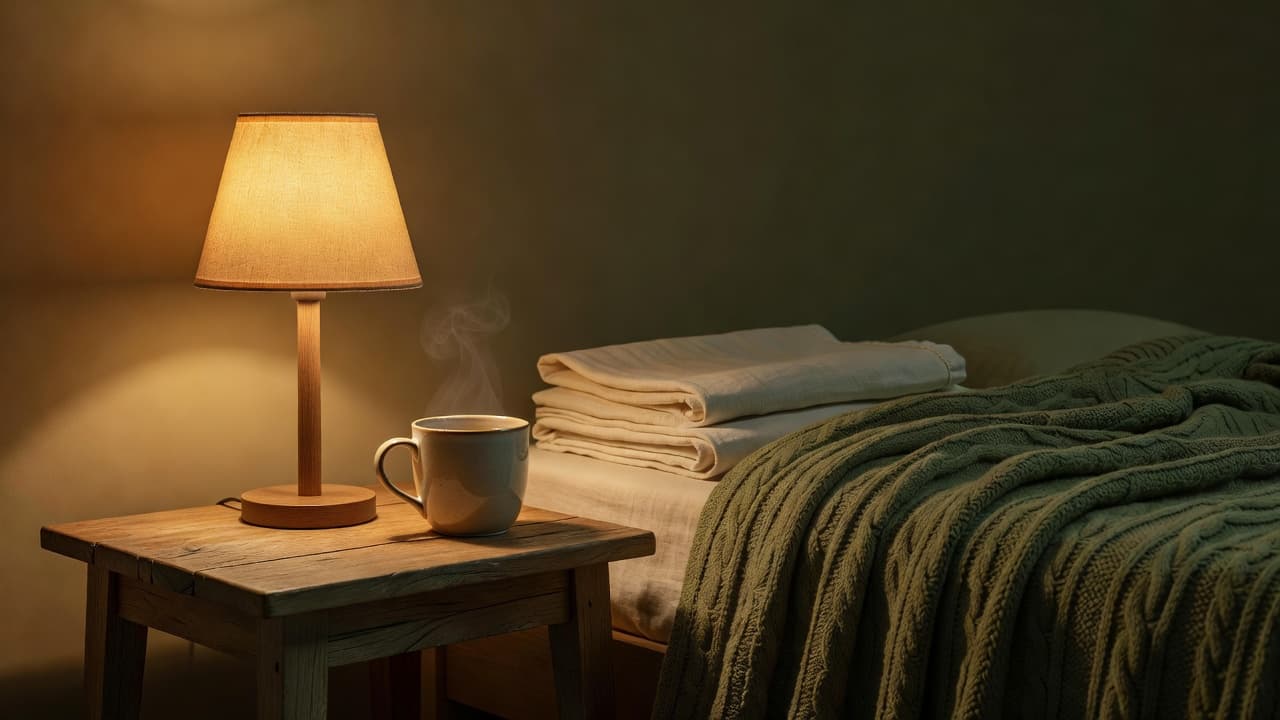
Low light and a quiet room help the body shift toward sleep.
Late screens, bright overhead lights, and using your bed as a home office are also counterproductive. These habits signal to the brain that the day is still active. If you need a reset, implementing better sleep hygiene through these nightly sleep hygiene rituals can help the bedroom feel like a place for rest once again.
Caffeine is another common culprit. Many people find they sleep better if they cut off their intake at least 6 to 8 hours before bed. Alcohol is even sneakier. While it may make you feel drowsy at first, it often fragments your rest later in the night and can aggravate the sensations in your legs. Harvard Health also points to massage, regular exercise, and limiting alcohol in its restless legs self-care overview.
Get more out of every article 👉 Join the Calm Collective for fresh insights sent directly to you.
A quick bedtime protocol that helps many people
Small, repeatable habits beat dramatic sleep hacks. If you are already exhausted, focus on simple wins.
The best routine does not try to knock you out. Instead, it lowers stimulation and gives your body a clearer path into rest. The American Osteopathic Association notes that more than half of patients report feeling better with morning exercise, while hard evening workouts can backfire in its piece on nonpharmaceutical approaches to restless legs. Incorporating consistent lifestyle changes into your evening is often the most effective way to calm your nervous system.
- Walk for 5 to 10 minutes if your legs feel jumpy. Slow and steady is enough to address the urge to move.
- Stretch your calves, hamstrings, and hips for a few minutes. Gentle stretching can help soothe the muscles, though you should be careful to distinguish this from the sudden, sharp pain of muscle cramps.
- Warm the legs with a bath, shower, heating pad, or warm compress. Some people prefer cool therapy, so test both to see what brings the most relief.
- Dim lights and put screens away 30 to 60 minutes before bed. Lower light helps your body clock stop arguing with itself.
- Write down tomorrow’s tasks or what is circling in your head. That quick brain dump can reduce the stay alert signal.
- Settle into a cool room, use soft bedding, and try a pillow between the legs if that feels better.

Gentle stretches can take the edge off without revving you up.
Why it actually works is pretty plain. You reduce stimulation, soften muscle tension, and stop asking the nervous system to stay on call. For many of us, managing the symptoms of restless legs syndrome is less about one giant mistake and more about fixing small leaks repeated every night.
When to look past the legs themselves
Sometimes the legs are the messenger, not the whole story. If restlessness shows up often, your body might be signaling low iron, a medication issue, chronic stress, long stretches of sitting, or another sleep problem that keeps the nervous system on edge. It is also important to consider if you are experiencing periodic limb movement, a related condition that frequently co-occurs with restless legs syndrome and can further disrupt your rest.
Travel is a classic trigger. So are long car rides, theater seats, and flights. If you already know sitting sets things off, aisle seats and regular stretch breaks are not a luxury. They are part of the plan.
And stress matters here more than many people expect. When your body is running hot, even mild discomfort can feel louder after dark. That is one reason people with racing thoughts often sleep worse overall. If that sounds familiar, this guide on how stress hormones affect your sleep fills in that missing piece.
Self-Assessment Checklist:
- Your urge to move gets worse after 9 p.m.
- You had caffeine within 8 hours of bedtime.
- You used Benadryl, a decongestant, nicotine, or alcohol late in the day.
- Your sleep schedule swings on weekends, or you take long afternoon naps.
- You spend long hours sitting and don’t move much during the day.
Educational Insight: If you checked 3 or more, you may be in the “stacked triggers” wellness archetype. Your body might be signaling a mix of timing, tension, and routine issues rather than one isolated cause.
If this is new, worsening, or showing up several nights a week, ask a clinician to review your medications and consider blood work. If your ferritin levels are found to be low, a doctor may recommend iron supplements to help address the root cause. Furthermore, if these symptoms lead to significant daytime drowsiness that impacts your quality of life, a formal sleep study may be necessary to gain a clearer picture of your health. Taking these steps is a practical way to manage your wellness.
Plant-based supports that fit a calmer evening
Look, there isn’t a magic tea, gummy, or lotion that fixes every rough night. Still, incorporating plant-based supports as part of your broader lifestyle changes can help many adults stop negotiating with bedtime and better manage the symptoms of restless legs syndrome.
Some people enjoy a warm CBD-infused tea, light leg massage, breathing work, or quiet music. Some build a steady routine around other clean wellness products that fit the evening without making big promises. If you explore that lane, choose formulas that are third-party lab tested, clearly labeled, and built with premium plant extracts rather than mystery blends.

A simple tea ritual can lower late-night mental noise.
For more ideas that pair well with a steady wind-down, these stress-reducing techniques for better sleep are a good place to start. The goal is modest and honest: make Tuesday night less noisy, not perfect.
Conclusion
When you experience restless legs at night, the cause is often a combination of factors, such as iron status, medication triggers, stress, late-day stimulants, and a sleep schedule that constantly shifts. Because of that, long-term management is built upon consistent lifestyle changes that support your body throughout the day and evening.
A steadier evening routine, gentle movement, and fewer late-night stimulants can make it much easier for the body to settle. If symptoms of restless legs syndrome persist despite these adjustments, getting curious early by speaking with a healthcare professional usually helps more than trying to tough it out.
Published By: